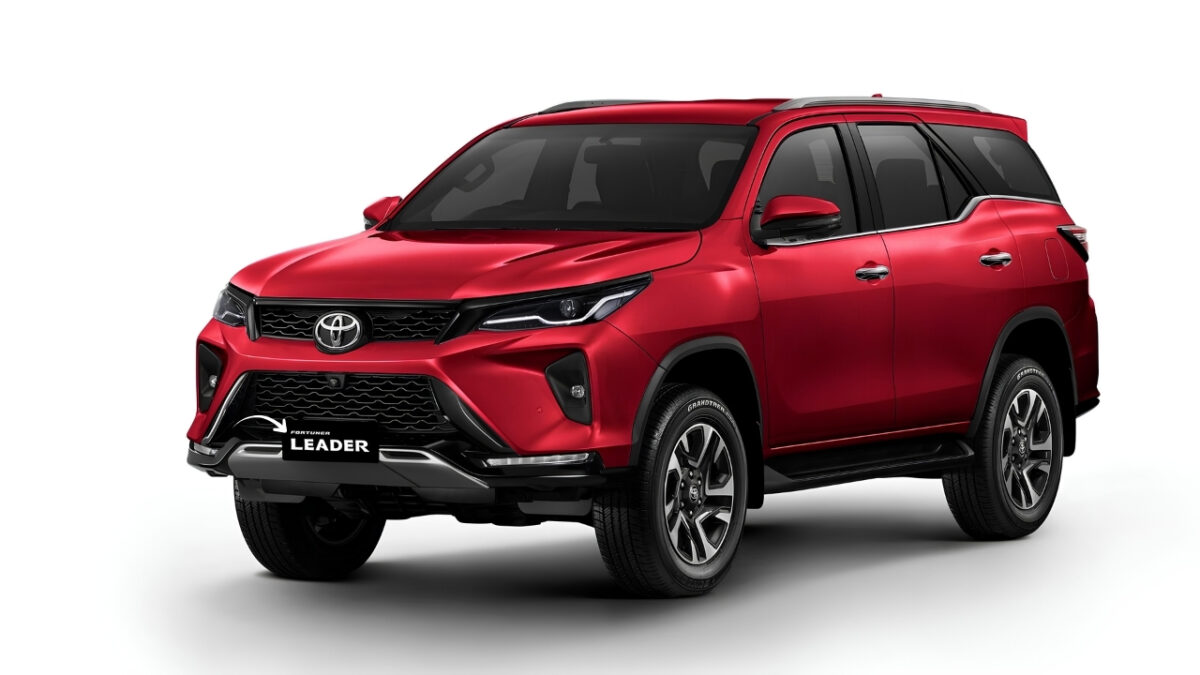
Toyota Fortuner New Facelift : The Toyota Fortuner is preparing for a major new chapter. Long recognised as one of India’s most successful premium ladder-frame SUVs, the Fortuner has built its reputation on strong road presence, proven diesel performance, rugged construction and dependable resale value.
Now, reports from international testing and industry sources indicate that Toyota is moving closer to unveiling an all-new generation, with a global debut expected around late 2026 and an India launch likely to follow in 2027.
New Fortuner Seen Testing Overseas
The biggest development is that next-generation Fortuner test vehicles have already been spotted on public roads in Thailand. The SUV was heavily camouflaged, but the images still suggested meaningful changes to its shape, lighting arrangement and overall proportions.
Thailand is an important market for Toyota’s body-on-frame vehicles and has traditionally played a central role in the development of the Fortuner and Hilux family. That makes these sightings especially significant for Indian buyers watching the model closely.
The current Fortuner still has a powerful presence, but the next model is expected to look more modern without losing the upright, tough character that defines the nameplate. Early reports point towards a wider-looking front section, redesigned LED headlamps, a bolder grille and sharper bumper detailing.
The rear may also receive more sculpted tail-lamps and a cleaner tailgate design. Toyota is likely to retain the high ground clearance and muscular wheel arches that make the Fortuner instantly recognisable on city roads and rough trails alike.
A More Advanced Platform
One of the most important expected changes is beneath the bodywork. The next Fortuner could move to Toyota’s newer TNGA-F architecture, a ladder-frame platform designed for larger and more capable vehicles.
This is expected to improve structural rigidity while giving engineers more room to refine ride quality, handling and safety technology.
For buyers, this could translate into a Fortuner that feels more settled at highway speeds and more comfortable over broken roads.
The existing model is respected for its toughness, though some customers feel that its ride can be firm, particularly when the SUV is driven without many passengers on board. A new platform could help Toyota preserve the SUV’s off-road ability while making it easier to live with during daily city use.
The Fortuner’s appeal has always been broader than just luxury. It is bought by families, business owners, long-distance travellers and customers in areas where road conditions are unpredictable.
Toyota will need to make the new vehicle more sophisticated while ensuring that it remains durable enough for the demanding conditions that made the present model popular.
Diesel Engine Likely to Continue
The 2.8-litre turbo-diesel engine is expected to remain central to the next Fortuner’s India strategy. This motor is currently the heart of the Fortuner experience for many buyers because it offers strong torque, confident overtaking performance and useful capability while towing or travelling with a full load of passengers and luggage.
Reports suggest that Toyota may continue with the familiar petrol and diesel engine choices, although the diesel could receive 48V mild-hybrid assistance on selected versions.
Toyota already uses mild-hybrid technology in the Fortuner Neo Drive, and a wider application of this system could help improve low-speed response, make the engine stop-start system smoother and reduce fuel consumption in certain driving conditions.
It is important to note, however, that a mild hybrid is not the same as a full hybrid. It supports the internal-combustion engine rather than allowing extensive electric-only driving.
The possibility of future alternative-fuel variants is also attracting attention. Toyota displayed flex-fuel and biodiesel-focused Fortuner concepts in Indonesia during 2026, including a version compatible with high-ethanol fuel.
These vehicles are not confirmed for regular production or for India, but they show that Toyota is exploring cleaner fuel pathways for its rugged SUV range.
Cabin Could Finally Take a Big Step Forward
The outgoing Fortuner remains practical and durable inside, but the upcoming generation is widely expected to introduce a more modern cabin. Buyers today expect large infotainment displays, connected-car functions, wireless smartphone integration, better camera systems and more convenience features even in rugged SUVs.
Toyota will likely respond with a redesigned dashboard, improved display screens, revised switchgear and higher-quality interior materials.
A more premium second-row experience may also be a priority. The Fortuner is often used as a family vehicle, and rear-seat comfort matters as much as the driver’s seat in this segment.
Better seat cushioning, improved air-conditioning controls, additional charging points and a more thoughtful storage layout could make a real difference on long journeys.
Safety technology is another area where expectations are rising. The next Fortuner is expected to offer more driver-assistance features, potentially including adaptive cruise control, lane-support functions, automatic emergency braking and a more advanced camera setup.
Availability may vary by market and variant, so Indian specifications will need to be confirmed by Toyota closer to launch.
What It Means for India Toyota Fortuner New Facelift
The Fortuner continues to occupy a distinctive place in the Indian SUV market. It faces competition from vehicles such as the Jeep Meridian, Skoda Kodiaq, Volkswagen Tayron R-Line and MG Majestor, but its formula is different from many monocoque, road-focused rivals.
The Toyota relies on a traditional ladder-frame chassis and offers a more commanding, go-anywhere personality, especially in four-wheel-drive form.
Toyota has not officially announced the Indian launch date or final specifications of the new Fortuner. Current reports indicate a global reveal by late 2026, followed by an India introduction in late 2026 or early 2027, although 2027 appears the more likely timeframe based on recent coverage.
Until Toyota makes a formal announcement, buyers should treat design, platform, feature and powertrain details as expectations rather than confirmed specifications.
Also Read this – 2026 New Toyota Innova Crysta launch with powerful engine, comfortable seats with IVR system
For now, the message is clear: Toyota is not merely preparing a cosmetic update. The next Fortuner looks set to be a comprehensive evolution, combining the toughness customers expect with a more contemporary cabin, stronger safety technology and potentially more efficient diesel assistance.
If Toyota gets the balance right, the Fortuner could remain one of the most desirable premium SUVs on Indian roads for years to come.
